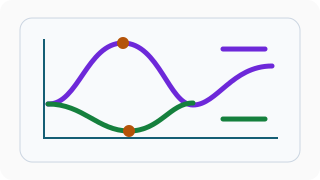
How to play Blood Glucose
Blood Glucose is a free GCSE biology game about how the body controls the amount of glucose in the blood. Play ten questions. You will match the pancreas and two hormones to their jobs, choose what should happen when a reading is high or low, and read a simple graph. Later questions compare Type 1 and Type 2 diabetes.
The round starts with organs and hormones. Then you will see short situations and example graphs. The last questions cover diabetes. A 15 second bonus clock runs on each question. A correct answer is worth 10 points. Answer before the clock ends and you earn 5 extra points. A correct answer after the timer ends still earns 10.
Choose an answer with keys 1 to 4 or tap a button. Press Enter to move on after the explanation appears. Tick Harder start to begin with later questions. Practice mode turns the clock off. The graphs use relative values to teach you how to read a trend. They are examples, not medical test results. You can find more games in the GCSE science games list.
The science behind blood glucose
Glucose is a sugar carried in your blood. Cells use it in respiration to release energy. The amount in your blood must stay within a suitable range. The body uses hormones to help control it. This regulation is an example of homeostasis, which means keeping conditions inside the body steady.
The pancreas monitors blood glucose. When the level is too high, the pancreas releases insulin. Insulin causes glucose to move from the blood into cells. Extra glucose is changed into glycogen and stored in liver and muscle cells. This lowers the amount of glucose in the blood.
When the level is too low, the pancreas releases glucagon. Glucagon causes stored glycogen to change back into glucose, which is released into the blood. Insulin and glucagon have opposite effects. Together they help return the blood glucose level towards its usual range. AQA labels the glucagon mechanism Higher tier; Edexcel and OCR also include glucagon in their GCSE Biology content. The body checks the result and adjusts hormone release as the level changes. This is called negative feedback. It keeps the response linked to the original change, rather than sending blood glucose in the same direction every time.
Type 1 and Type 2 diabetes affect this control in different ways. In Type 1, the pancreas does not make enough insulin. It is normally treated with insulin injections. In Type 2, body cells respond less to insulin made by the pancreas. A carbohydrate-controlled diet and exercise are common treatments in the GCSE specification. Obesity is listed as a risk factor for Type 2 diabetes. The AQA GCSE Biology specification, Edexcel GCSE Biology specification and OCR Gateway Biology specification give the course detail.
Tips for blood glucose questions
Keep insulin and glucagon separate. High blood glucose leads to insulin. Insulin helps glucose move from the blood into cells, and extra glucose can become glycogen. Low blood glucose leads to glucagon. Glycogen can then become glucose again. The Enzyme Activity game is another way to practise how the body uses chemicals.
Watch the direction in each question. Glucose is not the same as glycogen. Glucose travels in the blood. Glycogen is a storage form found in liver and muscle cells. The pancreas makes the hormones, while those other cells store the extra glucose.
For a graph, read the axis and compare the labelled points. Look at the start value, the later value and the direction of the line. A rise means the later value is higher. A fall means it is lower. These game graphs use relative values, so do not treat them as real readings or try to diagnose a condition from them. Use the axis label as well as the shape, because a line can rise while the scale still represents a relative example.
For diabetes questions, identify the change first. Type 1 means too little insulin is made. Type 2 means body cells respond less to insulin. Obesity is a risk factor for Type 2, not a description of every person with it. The Punnett Squares game covers inherited traits and genes, a different biology topic.
Use this blood glucose game in the classroom
Play once on your own, then compare one answer with a partner. Ask each other to explain the full chain: which hormone is released, what it does, and whether blood glucose goes up or down. Try to use glucose and glycogen correctly in your explanation.
For a graph question, describe the evidence before you name the pattern. Say which point you compared and what changed. A teacher can pause the round after an answer and ask the class to explain why the other choices do not fit.
The game is revision practice. Its example graphs and situations are simplified for learning. They are not personal health advice or a way to check someone’s blood glucose. Use your class notes and the relevant exam-board course when you revise.
Similar games
For more biology practice, try Heart and Circulation, Enzyme Activity, Punnett Squares and Respiration Equations. Each game covers a different part of GCSE biology.
Questions about blood glucose
These short answers recap the control system used in the game. The game’s graphs are simplified examples.
What controls blood glucose?
The pancreas monitors and controls blood glucose. It releases insulin when the level is too high and glucagon when it is too low. The two hormones have opposite effects.
What does insulin do?
Insulin causes glucose to move from the blood into cells. Extra glucose is changed into glycogen and stored in liver and muscle cells.
How does glucagon raise blood glucose?
Glucagon causes stored glycogen to change back into glucose. That glucose is released into the blood. AQA marks this mechanism Higher tier.
How are Type 1 and Type 2 diabetes different?
In Type 1, the pancreas does not make enough insulin. In Type 2, body cells respond less to insulin. Their common treatments differ in the GCSE specification.